You’re halfway through a shower when the water goes lukewarm. Or the new system went in this morning, and the hot tap is still running cold. Or it just seems slower than it used to be.
Either way, the question is the same: how long does a hot water system take to heat up, and is yours taking too long?
The short answer: most systems take anywhere from 30 minutes to several hours. Where yours sits depends on the system type, tank size, your electricity tariff, and the surrounding conditions.
But “heat-up time” actually means three different things. Mixing them up is why so many people think their system is failing when it isn’t. Let’s sort that out first.
What to Expect From Each Type of System
If you’ve just had a new system put in, or the power’s been out, you’re waiting for a whole tank of cold water to heat up. That’s full heat-up time, and it’s the longest wait your system will ever give you.
Day to day, though, what you really care about is how quickly the tank bounces back after everyone’s showered. That’s recovery time, and it’s what decides whether the last person in gets a hot shower or a cold one.
And if you’re standing at the kitchen tap waiting for the water to warm up, that usually isn’t the heater. It’s tap delay: cold water sitting in the pipes between the system and the tap. The further away the tap is, the longer you wait.
So when we talk about how long a system takes, recovery time is what counts, and the type of system makes the biggest difference.
Gas Storage
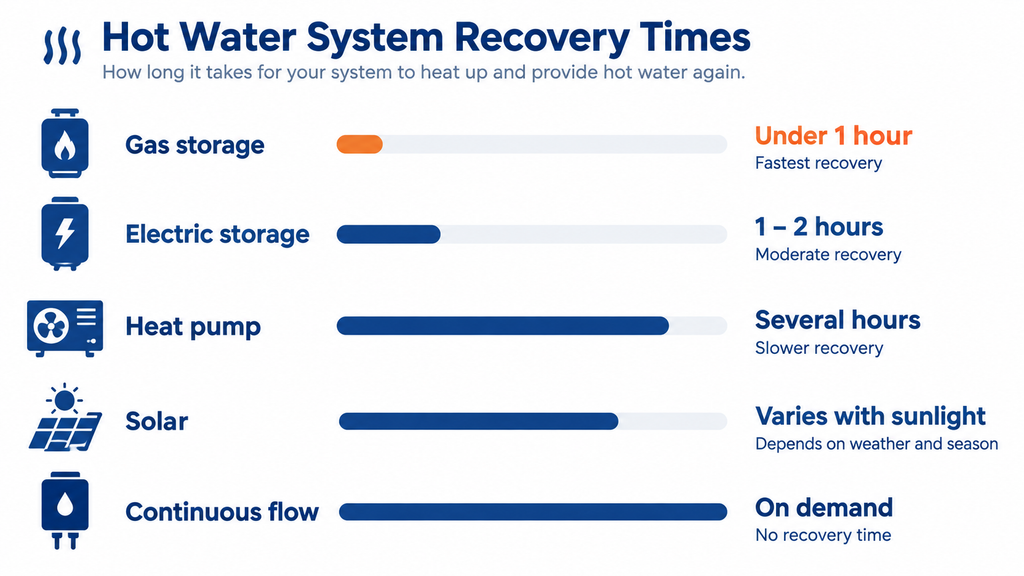
Gas is the fastest tank option, and a typical gas storage system can reheat a full tank in under an hour. For example, Rheem’s 155-litre gas model reheats around 185 litres of water an hour. Topping up after a couple of showers takes much less than that.
Electric Storage
Electric systems heat slowly and steadily. Expect a recovery time of around 1–2 hours, so a 150-litre electric tank takes noticeably longer than a gas tank of the same size. On an off-peak tariff, the wait can be even longer. We’ll explain why further down.
Heat Pump
Heat pumps are the most efficient option, but they recover more slowly and can take several hours. They work by drawing warmth from the surrounding air, so the cooler the air, the longer they take. That’s where Townsville has an advantage: warm air for most of the year helps a heat pump do its job.
Solar
Solar systems rely on the sun, with an electric or gas booster filling the gaps. Townsville’s wet season runs from October to April, and the heaviest cloud usually comes between late December and March. That’s when the booster does more of the work. Leave it switched on: Queensland Government health advice is not to turn boosters off on cloudy days.
Continuous Flow
Continuous flow systems (also called tankless) heat water as it passes through, so there’s no tank to heat and no recovery time. Any wait at the tap is tap delay, not the heater.
Those are the typical numbers. In your home, the real figure also depends on a few other things: tank size, how many people are using it, and even which electricity tariff you’re on. None of them mean something’s wrong, but they explain why your system might not match the times above.
What Affects Heat-Up Time
Here’s what we look at first when a system seems slow.
Tank Size and Household Demand
A bigger tank holds more hot water, but it also takes longer to heat from cold. And no tank keeps up if everyone showers back-to-back while the dishwasher and washing machine are running.
Practical tip: spread the load. Run the dishwasher or a hot wash after the morning showers rather than during them. If you run out at the same point in your routine every day, the system is probably working fine and is just too small for your household.
Energy Source and System Power
Gas, electric, heat pump, and solar systems all heat water differently, and even two systems of the same type can differ in power. A higher-rated element or burner heats the same volume faster.
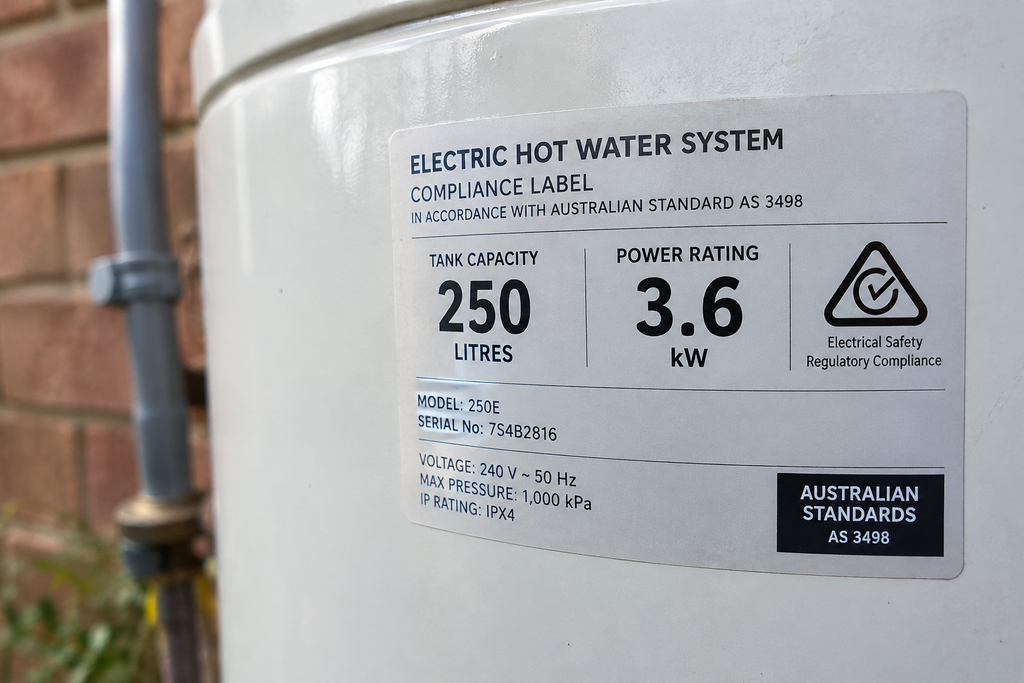
Practical tip: check the label on the side of your tank. It lists the capacity in litres and the power rating, which tells you what your system was built to do.
Off-Peak Tariffs
This catches many Townsville households out. Many electric systems run on an economy tariff, where Ergon Energy supplies power to the hot water only during certain hours, and those hours can change day to day.
- Tariff 31 gives power for at least 8 hours a day and reheats overnight. It’s designed for larger systems of 250 litres or more.
- Tariff 33 gives power for at least 18 hours a day.
On Tariff 31, if the tank runs out at 7 pm, it won’t reheat until the next heating window, usually overnight. That’s not a fault. That’s the tariff doing exactly what it’s designed to do.
Practical tip: check your electricity bill. It lists your hot water tariff separately. If you’re on Tariff 31 and running out most evenings, ask a licensed electrical contractor about moving to Tariff 33 for more heating hours.
Incoming Water Temperature
The colder the water coming into your tank, the more work the system has to do. In warm climates, supply water usually comes in warmer, which shortens heating times.
Temperature Setting
Queensland law requires hot water tanks to store water at 60°C or more to control Legionella bacteria. A valve then mixes the water down to 45–50°C before it reaches your bathroom taps.
Practical tip: don’t turn your system down to make it heat faster. It’s unsafe, and only a licensed electrician should adjust the thermostat. If the water at your taps feels too hot or not hot enough, get it checked rather than adjusting it yourself.
None of these factors mean your system is broken. But if a system that used to keep up suddenly can’t, the water won’t get hot at all, or you notice water pooling around the tank, that’s not a setting or a tariff. That’s a fault, and the next section will help you tell the difference.
Is Your Hot Water System Too Slow?
By now you know what affects heat-up time. The next question is whether your system is just doing its job or trying to tell you something.
The best benchmark is your own system. After the morning showers, note how long it takes before the hot water is back to full temperature. If that’s within the times we covered above for your type of system, it’s doing its job.
If yours is falling well outside these numbers, and it isn’t your tariff, it’s worth a look before it gets worse.
Warning Signs
Most systems don’t fail overnight. They slow down first, and the signs are easy to miss when they creep in gradually:
- The tank takes longer to recover than it used to
- Hot water runs out sooner, even though your routine hasn’t changed
- The water is only lukewarm, or the temperature swings mid-shower
- You hear rumbling or popping from the tank, see water around its base, or notice your power or gas bill creeping up
Slow today often means cold tomorrow. A tired element or failing thermostat rarely fixes itself. It just gets slower until it stops.
Common Causes of Slow Recovery
Here’s what’s usually behind those signs when we open up a system:
- Sediment build-up. Sediment settles at the bottom of the tank over time and sits between the heat source and the water, so the system has to work harder to heat the same amount. It’s often the cause of that rumbling or popping sound.
- A faulty element, burner, or thermostat. These parts do the heating. When one starts failing, you get lukewarm water. When it fails completely, you get none.
- An ageing system. Insulation wears and components tire with age, which is why performance tends to slip slowly over the years. Most storage systems last between 8 and 12 years, and our hot water systems guide explains what affects lifespan and when replacement makes sense.
- An undersized system. This isn’t a fault. The tank simply can’t keep up with how much hot water your household uses.
- Pipe distance. That’s tap delay, not slow heating. The heater is fine; the water just has further to travel.
Real-World Examples
The trick is comparing your system with how it normally behaves, not with the house next door.
Normal:
- A family of five does back-to-back showers before school. The last shower runs lukewarm, but the water is hot again within the hour. That’s a busy morning, not a fault.
- An off-peak system runs out after evening showers and is hot again by morning. That’s the tariff.
- A solar system leans on its booster through wet-season cloud. That’s what the booster is for.
Worth checking:
- Same family, same routine, but now the second shower runs cold. Nothing changed except the system.
- The tank has had all night to heat, and the morning shower is still only warm. That rules out the tariff and heavy use.
- One person home, light use, and they’re still running out. That rules out demand.
What Happens If You Ignore It
A slow system costs you more than patience:
- Higher bills. A system with sediment or a struggling element runs longer to heat the same water, and you pay for every extra hour.
- More wear. The harder the parts work, the faster they wear out.
- A shorter lifespan. Small problems left alone shorten the life of the whole system.
- Failure at the worst time. Systems rarely die on a quiet Tuesday afternoon. It’s usually a full house on a Sunday morning, and the only fix is an urgent call-out.
Most of these problems are cheaper and quicker to fix when you catch them early. If your system is showing any of the signs above, give us a call. We’ll talk you through what’s likely going on and give you a fixed price before we touch a spanner.
How to Improve Hot Water Recovery Time
A slow system doesn’t always need replacing. Often, some basic maintenance or a small change gets it back on track.
Improve Efficiency with Maintenance
- Flush the tank. On storage systems that allow it, flushing clears out the sediment that slows heating. Check your manual first, or ask a plumber to do it.
- Get the thermostat checked. As we covered above, that’s a job for a licensed electrician.
- Insulate exposed pipes. Lagging the hot water pipes reduces the heat lost between the tank and the tap.
- Check the anode. The anode is a metal rod inside the tank that corrodes so the tank doesn’t. Have it checked on the schedule in your manufacturer’s manual.
- Review your tariff. If Tariff 31 isn’t giving you enough hot water, moving to Tariff 33 gives you more heating hours. A licensed electrical contractor handles the switch.
When an Upgrade Makes Sense
Sometimes the system isn’t faulty. It’s just the wrong fit. It may be time to upgrade if:
- you regularly run out of hot water, even though the system is working normally
- your household has grown
- the system is ageing or keeps needing repairs
Your options include a larger tank, gas for faster recovery, continuous flow so there’s no tank to run dry, or a heat pump or solar system for lower running costs.
If corrosion is a concern, some stainless steel tanks, like Rheem’s stainless steel gas model, don’t need an anode at all, which means less maintenance. Stainless steel isn’t suited to every area, though, so ask us whether it’s the right choice for your home.
Heat pumps and solar systems may also qualify for federal Small-scale Technology Certificates, which bring down the upfront cost. Queensland’s state rebate for these systems has now closed.
If you’ve tried the basics and your system is still struggling, it’s time to bring in a plumber.
When to Call a Professional
Some hot water problems can wait for a weekday booking. Others can’t. Here’s how to tell which is which.
Call Immediately If
- You have no hot water at all. If the power is on and the system isn’t on a tariff that’s still waiting to reheat, something has failed.
- The tank is leaking, or the relief valve won’t stop running. A small drip from the relief valve while the system heats can be normal. A steady stream or water pooling around the base isn’t. If you can reach it safely from dry ground, switch the system off at the switchboard, then turn off the water supply to stop the leak from spreading.
- You smell gas. Don’t use light switches or anything with a flame. If it’s safe, turn off the gas at the meter, open doors and windows, get everyone outside, and call for help.
- The circuit breaker keeps tripping. Don’t keep resetting it. Repeated tripping usually points to a fault in the element or wiring, and it needs to be checked before you use it again.
Book a Service If
- You’ve tried the basic checks, and nothing has improved.
- Performance keeps dropping, even if you still have some hot water.
- The hot water comes out discoloured or smells unusual. Run a cold tap first. If the cold water is discoloured too, it’s likely the town’s supply. Townsville has had temporary discolouration after heavy rain before. If only the hot water is affected, the problem is in your system.
What a Plumber Will Check
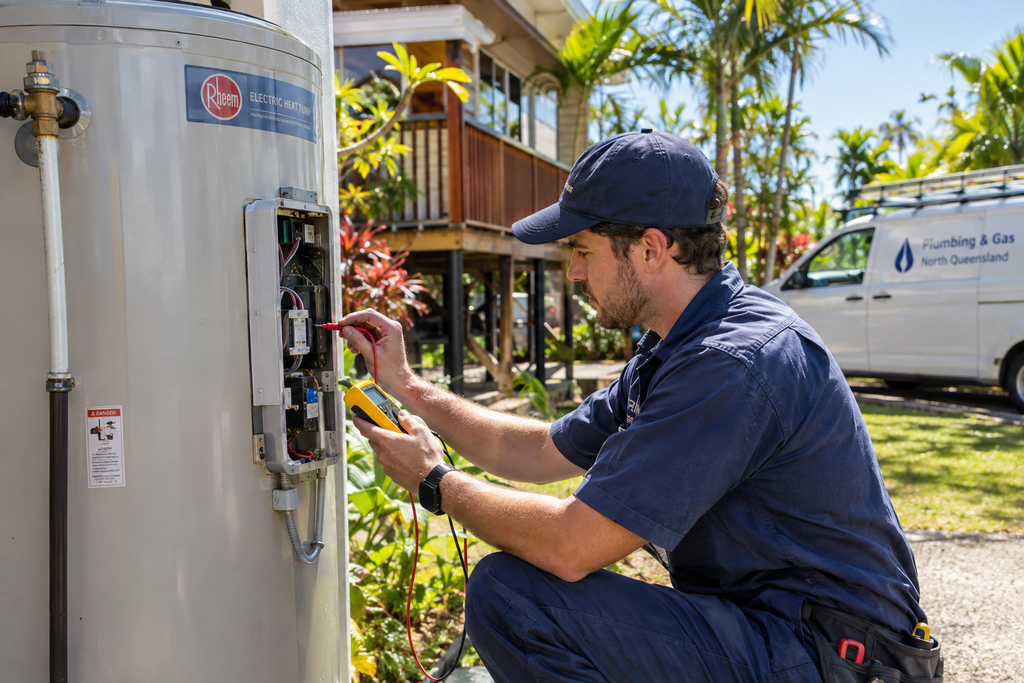
When we look at a slow or failing system, we test the element and thermostat on electric systems, check the burner and pilot on gas, and look for sediment build-up and a worn anode. Finding the actual fault first means you only pay for the repair you need.
It also matters who does the work. In Queensland, a QBCC-licensed plumber must do hot water work, including installing or replacing a system. If your system does need replacing, Queensland also requires a tempering valve to be fitted so the water at your taps can’t scald. A licensed plumber handles all of that as part of the job.
Our plumbers are QBCC licensed and available 24/7 for hot water system repairs and replacements in Townsville. Whether it’s no hot water before work or a leak you’ve just found, call us. We back our work with a lifetime labour guarantee.
Frequently Asked Questions About Hot Water Systems
How long does a hot water system take to heat up?
Most systems take between 30 minutes and several hours. Gas storage can reheat a full tank in under an hour, electric storage takes around 1–2 hours, and heat pumps can take several hours. Continuous flow systems heat water on demand, so there’s no wait for a tank.
How long does a new hot water system take to heat up from the cold?
Longer than everyday recovery, because the whole tank starts cold. Your manual will give the full heat-up time for your model. If your new electric system is on Tariff 31, it may not heat until the next overnight window, so don’t expect hot water straight after installation.
Is it normal to run out of hot water at night on Tariff 31?
Yes. Tariff 31 only supplies power for heating overnight, so once the tank runs out in the evening, it won’t reheat until the next heating window. If it happens most nights, ask a licensed electrical contractor about moving to Tariff 33, which gives at least 18 hours of heating a day.
How long does a 150-litre hot water system take to heat up?
A 150-litre gas system can reheat a full tank in under an hour. An electric system of the same size takes noticeably longer, and on an off-peak tariff it may wait for the next heating window.
Why is my hot water system taking longer than usual to heat up?
The most common causes are sediment build-up, a failing element, burner or thermostat, or an ageing system. If your routine hasn’t changed but your hot water has, get the system checked before it stops working completely.
Can I turn my hot water system down so it heats faster?
No. Queensland law requires stored hot water to be kept at 60°C or more to control Legionella bacteria. Any thermostat adjustment should be done by a licensed electrician.
Why does it take so long for hot water to reach my tap?
That’s tap delay, not the heater. Cold water sitting in the pipes has to run out first, so the further the tap is from the system, the longer you wait.
Should I turn off my solar booster in the wet season?
No. The booster keeps your water hot when cloud cuts the sun’s input, and Queensland Government health advice is not to switch it off on cloudy days.
When is a hot water problem an emergency?
Call straight away if you have no hot water at all, the tank is leaking, the relief valve won’t stop running, you smell gas or the circuit breaker keeps tripping. Our licensed plumbers are available 24/7 for urgent hot water problems.
Don’t Wait for a Cold Shower
How long your hot water takes to heat up depends on your system type, tank size, tariff, and the conditions around it. Most of the time, a slow system is either working within its limits or has a simple problem to fix. Knowing which one you’re dealing with saves you money.